By the mid-nineties the PC industry had a fast, cheap, well-supported bus, and the industrial world had mechanics that could survive a factory floor. CompactPCI, published in 1995, was the obvious combination: PCI signalling, Eurocard boards, pin-and-socket connectors and a backplane built for hot swap.
What it borrowed and what it changed
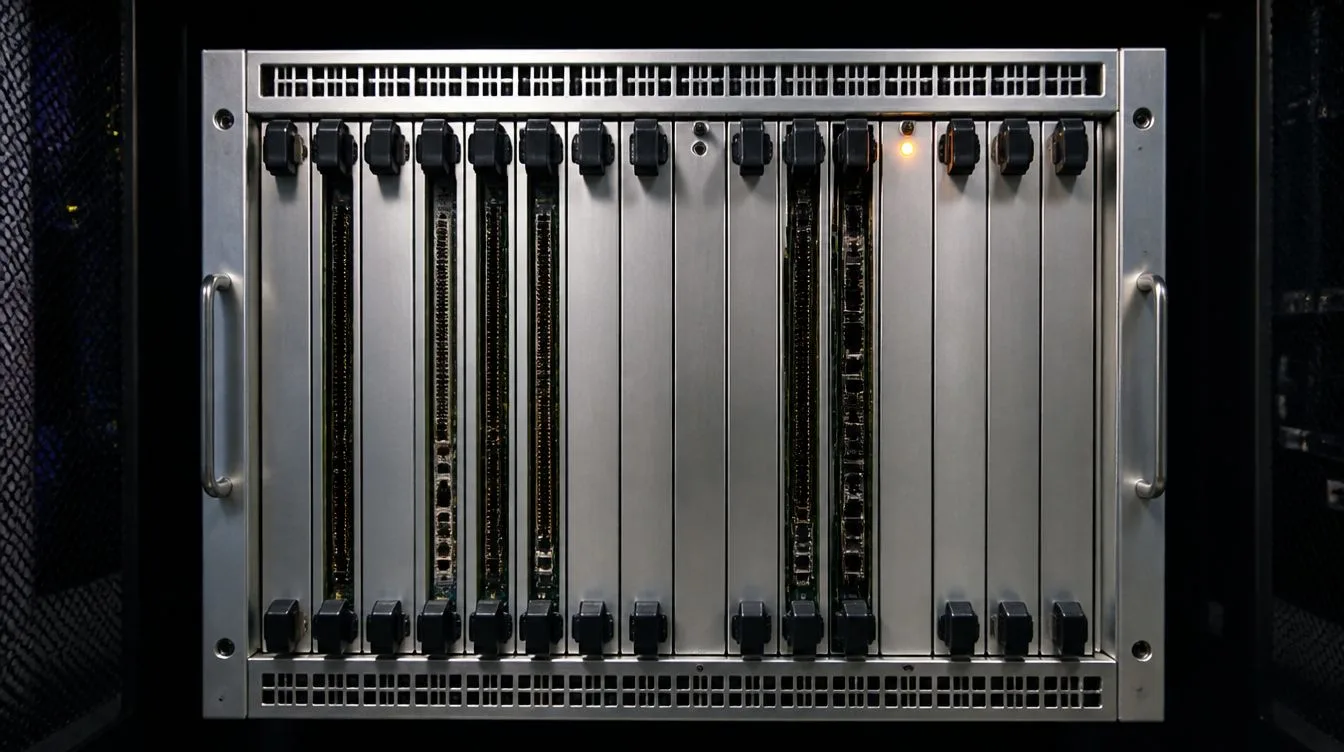
Electrically a CompactPCI backplane is a PCI bus, which meant that silicon, drivers and operating-system support arrived for free. Mechanically it is nothing like a desktop: 3U or 6U Eurocards, a 2 millimetre hard-metric connector with 47 rows of pins, front-panel handles with microswitches, and staged pin lengths so that ground mates first and the hot-swap controller learns about a board before its signal pins touch.
Hot swap, properly specified
Hot swap was the feature that sold the format into telecommunications. The specification defines three levels, from basic through full, and the useful one is full hot swap: the handle switch tells the platform a board is about to leave, software quiesces the driver, an LED confirms it is safe, and only then does the operator pull. Nothing about this is implicit, which is why it works in a rack somebody else has to maintain at three in the morning.
Where it sits today
CompactPCI was largely displaced in new telecom designs by AdvancedTCA and, later, by plain servers. It survives in machine control, rail signalling and test equipment, and in the CompactPCI Serial variant, which keeps the mechanics and replaces the parallel bus with PCIe, USB and Ethernet links.